Deadlock 2026 Guide: Everything You Need to Know Before the Open Beta
Valve doesn't release games often. When they do, the world pays attention. Deadlock is the most significant new IP the company has shipped in over a decade - and if you need a frame of reference, think of it as a mix of Overwatch's hero identity, Bioshock Infinite's world aesthetic, Dota's strategic depth, and Fortnite's verticality, with movement that genuinely reminds me of Vampire the Masquerade: Bloodhunt. It runs on Source 2, has been in quiet development since around 2018, and already has over 100,000 players in closed invite-only early access.
BEST PLACE TO WATCH DEADLOCK STREAM: Twitch.tv/KaRzye

Open beta hasn't officially arrived yet. But it's coming - and when it does, a massive wave of new players will land in something with a genuinely steep learning curve. Most of them will spend their first 20 hours confused about why they keep losing, or give up entirely before the game clicks.
This guide exists so you're not one of them.
We'll cover what Deadlock actually is, how its systems work, what new players consistently get wrong, and the specific mental model that lets you start climbing ranks the moment you get in. Whether you have an invite right now or you're waiting for open access - read this first.
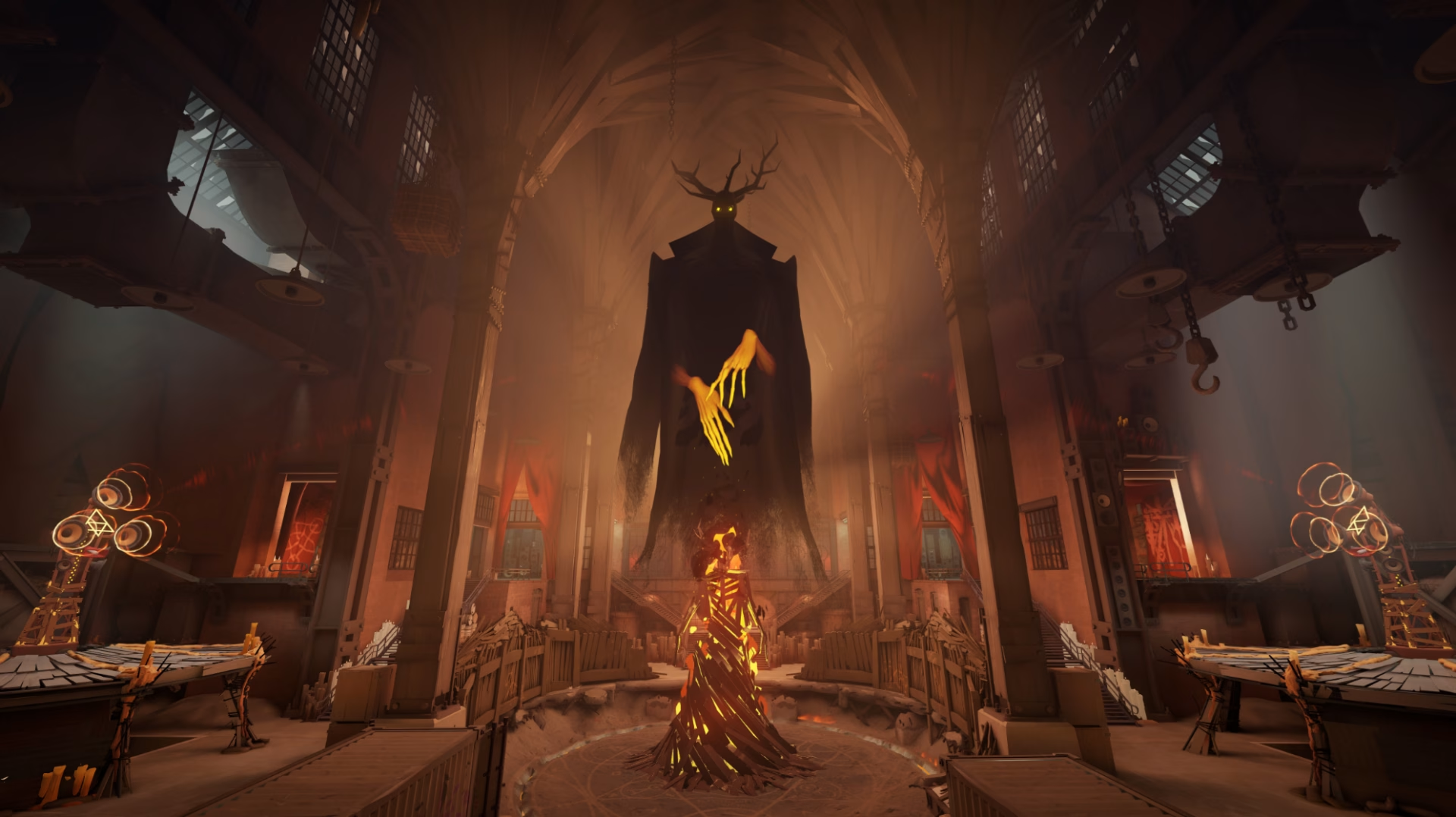
What Is Deadlock? Why It's Different From Every Game You've Played
Deadlock is genuinely hard to categorize because it combines two genres that rarely cooperate well: the tactical third-person shooter and the MOBA. Playing it for the first time feels like being handed two games simultaneously and told to play both at once.
The shooter layer works roughly like you'd expect - you aim, you track, you manage recoil, ammo types, projectile trajectories and positioning. Coming from CS2 or Valorant, gunfeel is probably the easiest thing to adapt to. Movement is fluid, decision-making matters most, and duels are decided by crosshair placement, ammo economy, movement discipline, and timing so you don't get caught by multiple opponents at once.
The MOBA layer is where most shooter players get lost. There are lanes. There are objectives that need to be destroyed in sequence. There's a farming economy. There are items that transform your hero from baseline into something entirely different. There are neutral camps, objective timers, and map phases that completely change what you should be doing at any given moment.
The timing layer ties both together - Deadlock has recurring objectives that spawn on a schedule. Knowing when the mid boss appears, when the Urn becomes available, when your first item spike hits - being in the right place at the right time consistently beats being the best mechanical player in the lobby.
The goal of every match is simple: destroy the enemy Patron, an effigy hidden deep in the enemy base. To reach it, you push down lanes, destroying Guardians, Walkers, and eventually Shrines. Everything you do - farming, fighting, rotating - serves that goal.
Frames dropping exactly when the fight starts?
Deadlock leans hard on the CPU during team fights, which is the moment your frames fall and your aim stops landing. We tune your PC remotely: Windows, drivers, BIOS and network. You can measure it yourself before and after, in the game, with us watching. We do not stop you.
See PC optimizationSatisfaction guarantee and six months of support after the session. Not sure if it is worth it? Ask for a free check on our Discord.Deadlock 2026 Status: Early Access, Open Beta, Full Release
Right now (March 2026), Deadlock is in closed early access, invite-only. You need a friend invite from an active playtester to get in. The Steam page clearly labels it as "early development" - temporary art, experimental gameplay, frequent balance updates.
The latest major update, Old Gods, New Blood (January 23, 2026), added six new heroes via player voting, introduced the Street Brawl mode (a fast-paced 4v4 with equal resources), rebuilt the map routes, and significantly improved the UI and HUD. The game looks and feels much more polished than it did a year ago.
Rumors of an open beta have been circulating throughout 2025 and into 2026. The most reliable estimated date from community insiders and game journalists: late 2026 for full release, with an open beta likely earlier. Valve hasn't confirmed anything, which is typical for them. There's still a lot to do, so we don't really know, but it's easy to deduce that the most talented people at the studio are working on Deadlock and HL3? (maybe).
What this means for you: if you can get access now, every hour you put in before the floodgates open is compounding advantage. The meta, the heroes, the map - none of this will be unfamiliar when the crowd arrives.
BIOS, memory, network and input we go through together on your screen. We measure before and after in your games, so you see the difference yourself, before we hang up.
Core Mechanics: What You Need to Understand Before Your First Match
Souls - The Currency That Runs Everything
Souls are Deadlock's farming currency. Everything depends on them: item purchases, hero upgrades, ability unlocks. The team that farms more efficiently wins more fights, wins more objectives, wins more games. Full stop.
Souls come from several sources, but one dominates all others: Trooper waves (the lane minions). Killing Troopers generates soul orbs - a flying portion that can be denied by the enemy, and a ground portion that drops nearby. You need to shoot the flying orb to secure it. Miss it and the enemy can steal it.
The other sources - jungle Denizen camps, breakable crates, Spirit Urns - are secondary. They supplement your income; they don't replace waves. The single biggest mistake new players make is leaving lanes to chase fights or wandering the map while Trooper waves crash uncontested. Every missed wave is souls handed directly to the enemy.
Unsecured vs. Secured Souls: Souls from jungle camps and crates start as unsecured (shown with a separate counter). If you die carrying unsecured souls, they drop and the enemy can collect them. Spend unsecured souls first - convert them into items before you take a fight.
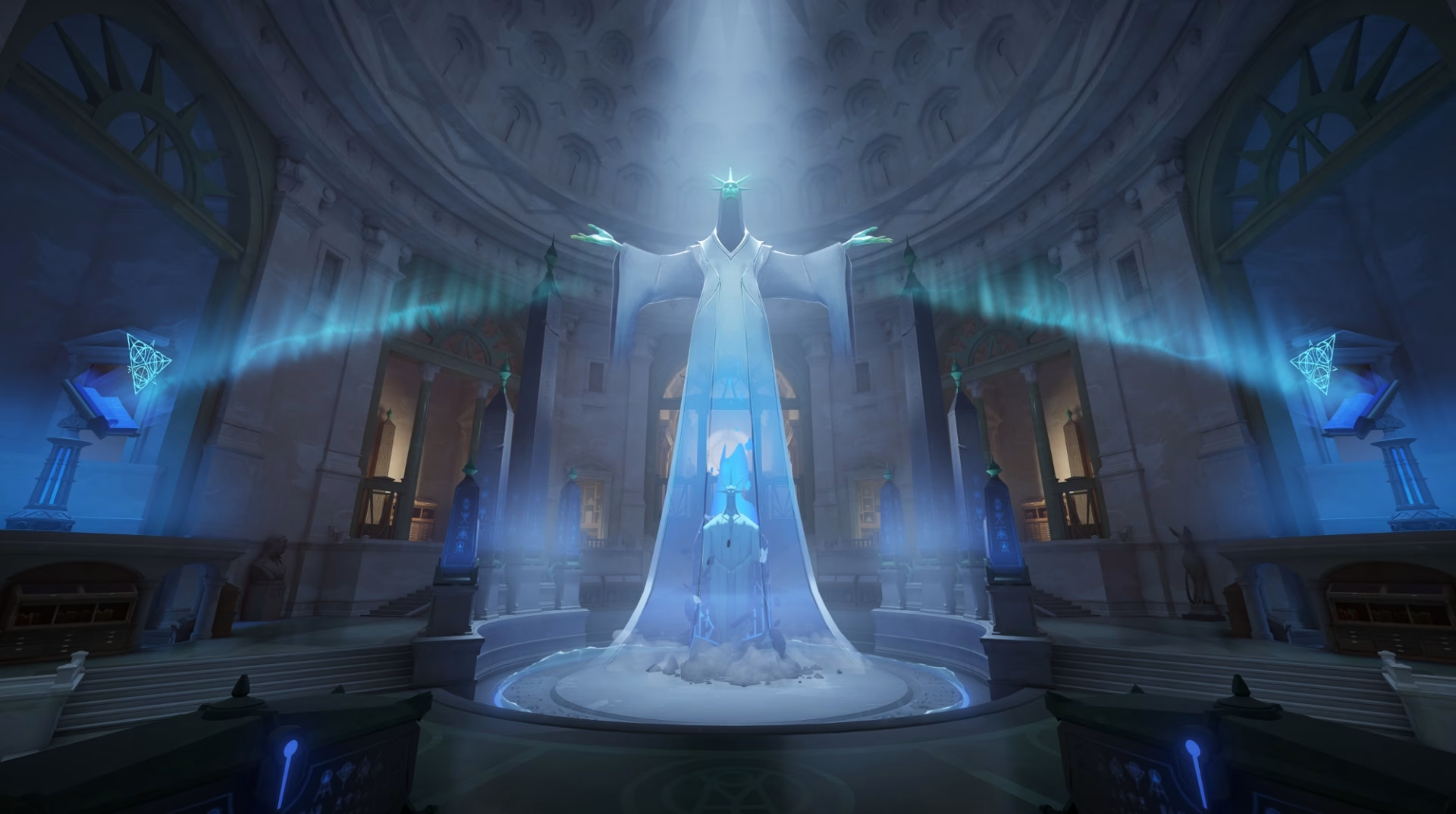
Items - How You Actually Become Stronger
Deadlock has an experience and ability progression system similar to League of Legends - you allocate points, and ability upgrades require increasing amounts of points. But the raw power of your hero comes from items bought with souls. The shop divides them into three categories: Weapon (gun damage, fire rate, range), Vitality (health, healing, resistance), and Spirit (ability power, cooldowns).
Most heroes scale best with a specific category, but itemization is flexible - you build for the problems the match presents. Getting poked out of lane constantly? Buy sustain before damage. Your hero's ult is the win condition? Rush the Spirit items that amplify it.
Ability Points (AP) are separate from items. You earn them as you accumulate souls - 1 AP is cheaper, 2 AP is mid-tier, 5 AP upgrades your ultimate. Unlike traditional MOBAs, you can upgrade any ability in any order. No mandatory unlock sequence. This means early ability decisions are meaningful - the right 1 AP upgrade early can change how your entire lane goes.
Movement - The Most Underrated System in the Game
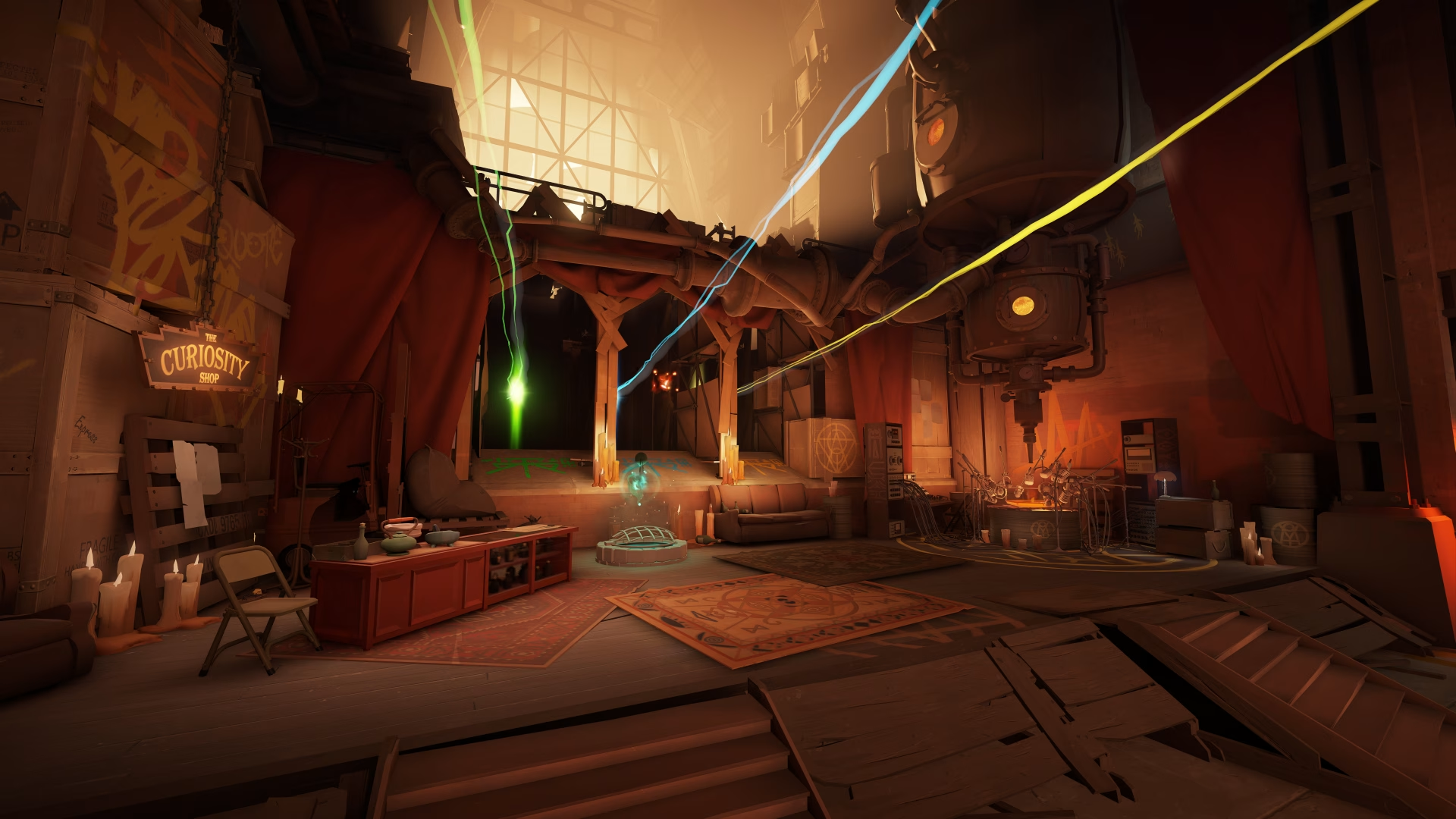
Deadlock's movement system is one of the most underused elements at new-player level. Every hero has stamina - a resource that powers dashes, air dashes, and slides. These aren't cosmetic - they're how you dodge abilities, close distance, escape ganks, and reposition mid-fight.
Ziplines run along every lane and let you travel quickly across the map. You can only use enemy ziplines if your team controls that lane. Losing a lane doesn't just cost you Guardians - it costs you the map mobility those ziplines provided (though you can take it back).
Double jumping, air dashing, and sliding are the bread-and-butter of combat movement. Sliding while shooting doesn't consume ammo. Dashing gives brief invulnerability windows that experienced players use to dodge skillshots. New players who move in straight lines get killed by abilities that would have missed anyone who understood their stamina resource.
The Map and Objectives: What to Destroy and When
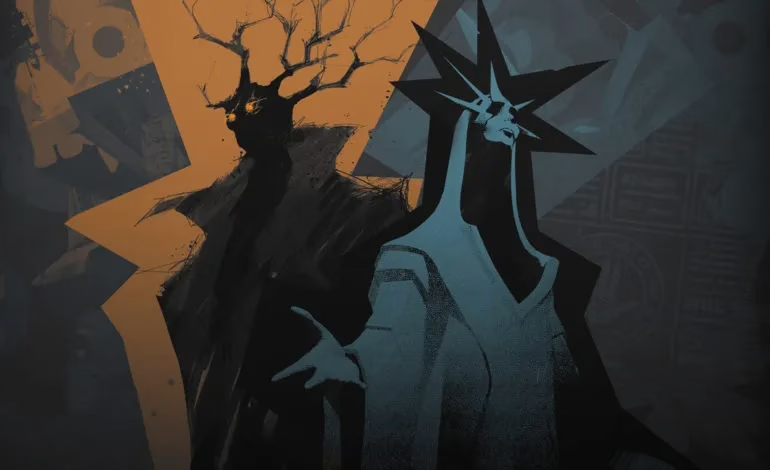
After the February 2025 update, Deadlock's map has three lanes connecting the two bases. (Four lanes were great - the game dynamics were wild - but the added complexity was overwhelming for most players, so here we are.) Each lane has a sequence of objectives to destroy before reaching the enemy Patron:
Guardian → the first structure in each lane, defended by a laser beam. Becomes vulnerable when your Troopers get close. Don't push it alone - let the wave do the work.
Walker → a giant robot with area attacks. Significantly harder than the Guardian, requires focused team effort or a numbers advantage.
Elder Guardians → the final lane structures before the base. Taking these opens access to the Shrines.
Shrines → destroying an enemy Shrine gives your team a permanent item flex slot - an extra equipped slot that provides a meaningful stats boost for the rest of the match. A critical objective that teams frequently under-prioritize.
Patron → the final objective. Eliminating it wins the game. Two defenders inside the ritual circle near the Patron make it invulnerable - clear them before focusing the objective.
Timed Objectives: Learn These Before Your First Ranked Game
Spirit Urn (spawns ~minute 10): Capture-the-flag mechanic. While carrying the Urn you're silenced - no abilities, weapons, or items - but you keep stamina and melee. Deliver it to the designated spot for a massive soul reward for your team. A critical comeback mechanic - don't ignore it because you're losing.
Mid Boss (spawns ~minute 10): Deadlock's Baron/Roshan equivalent. Killing it drops a Rejuvenator giving your team bonus respawn lives. Fight for it when you have a numbers advantage; don't start it if enemy positions are unknown and they could rotate in - unless you have the lead and are dictating the tempo.
Sinner’s Sacrifice: The "slot machine" shrines scattered around the map. Risk a percentage of your unsecured souls for a potentially multiplied payout. High risk, situationally very useful when you're sitting on unsecured souls you might lose anyway.
Bridge buffs: Power buffs located on the bridges to the left and right of the map. A massive temporary power boost in the early game if you manage to secure one. In lower ranks, almost nobody bothers with them - which makes them essentially free if you know they exist.
Laning Phase: Where Most Players Win or Lose Before They Realize It
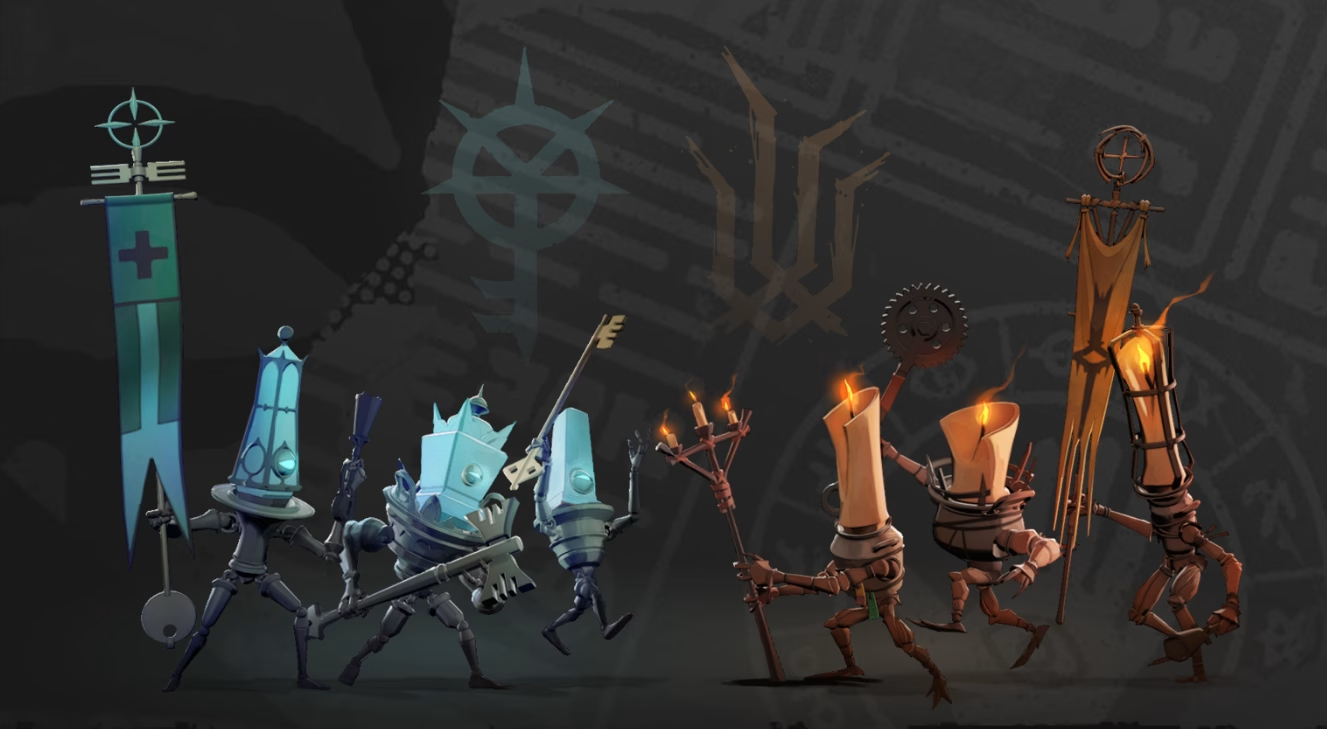
The first 8-10 minutes determine your trajectory for the rest of the match. New players from shooter backgrounds tend to treat laning as optional - they want to fight, roam, find action. That mindset will keep you at the bottom of the rank distribution indefinitely.
Your in-lane priorities, in order:
- Farm Trooper waves - always
- Deny enemy soul orbs when possible
- Harass the enemy to reduce their efficiency
- Secure lane objectives when the opportunity opens naturally
- Rotate for objectives - only after crashing your wave into the enemy Guardian so Troopers tank it
The key mechanical skill in lane: soul orb securing. When a Trooper dies, an orb flies up - shoot it before the enemy does. In the early laning phase, this small game decides who builds the gold lead that translates into the first item advantage.
Common laning mistakes:
- Dying to chase a kill while the enemy steals your wave
- Pushing the Guardian without your wave tanking its laser first
- Switching lanes every time you die - pick your lane and commit
- Ignoring the healing Trooper in the wave (the one that heals you when killed while nearby)
- Shopping at the wrong time - buy before the wave crashes, not during it
When to leave lane: after you've crashed your wave into the Guardian (so Troopers tank it while it's undefended), done your shopping, and there's a timed objective or a teammate in danger worth rotating for.
Deadlock Ranked System: From Obscurus to Eternus Explained
Deadlock's ranked mode has 11 ranks divided into 6 divisions (I through VI), starting from Obscurus (the provisional rank every player starts with) and climbing through:
Initiates → Seeker → Alchemist → Arcanist → Ritualist → Emissary → Archon→ Oracle→ Phantom→ Ascendant → Eternus
The rank system uses two types of MMR:
- Core MMR: your overall profile rating
- Hero MMR: a per-hero rating based on your last 20 games with that specific hero
This creates an interesting mechanic: heroes you play less have lower Hero MMR, meaning you'll face weaker opponents on them. It's exploitable - master 2-3 heroes, then expand your pool, and you can play against lower-ranked opponents while your Core MMR adjusts upward.
To access ranked mode, you need to complete 50 regular matches first. The system needs enough data to place you accurately.
What Actually Separates Low-Rank from High-Rank Players in Deadlock
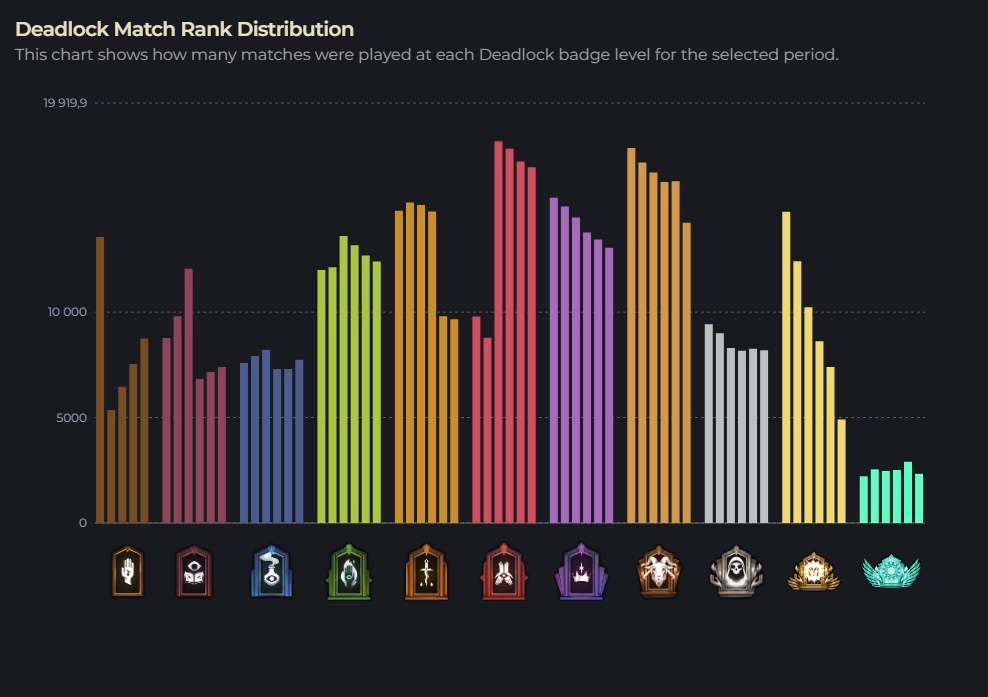
Low-rank players fight for kills. High-rank players fight for souls and objectives.
Every fight should have a purpose beyond "there's an enemy." Win the fight, then push the Guardian. Win the fight, then take the Urn. Kills that don't convert into objectives or farm advantages are tempo-neutral at best, negative if you die taking them.
Low-rank players roam randomly. High-rank players roam with timing.
Leaving your lane at the wrong moment donates a wave to the enemy. Leaving at the right moment - after crashing a wave, before a timed objective spawns - creates impact without sacrificing income.
Low-rank players buy whatever looks powerful. High-rank players buy for the specific problem they're facing.
Dying to the same hero's ability repeatedly? There's an item for that. Can't survive long enough to deal damage? Vitality first. The shop is not a power menu - it's a problem-solving interface.
Low-rank players ignore the replay system. High-rank players watch everything.
Deadlock has a replay system. Use it the same way CS2 players use demo review - identify the 2-3 rounds where you made a decision you're unsure about, and understand why it went wrong. The patterns appear fast: you're dying in the same phase of the game, to the same type of play, from the same position on the map. That's a habit, not bad luck.
Hero Selection: Where to Start in Deadlock
Deadlock currently has 38+ heroes following the January 2026 additions. For new players, the most important criterion isn't the "best" hero - it's the hero whose core mechanic you can grasp quickly enough to focus on the MOBA layer rather than the ability layer.
Forgiving heroes for new players:
- Abrams - melee-heavy tank, straightforward kit, teaches you lane presence and aggression
- McGinnis - mobile turret ultimate, very readable kit, good for learning lane control
- Grey Talon - ranged, poke-heavy, teaches lane harassment without committing to all-in fight
Heroes that reward mechanical skill from shooters:
- Vindicta - AWP-style ranged assassin, mechanically familiar for CS2 players that also fly on hvh or something LMAO.
- Warden - high-damage rifle kit, positioning logic similar to CS2 support roles
Complex but powerful once understood:
- Haze - hard carry, Fixation stacking mechanic, very weak early, devastating in the late game
- Seven - heavy ability combos, high skill ceiling, rewards players who understand timing windows
Before queueing, Valve lets you set hero priorities - rank the heroes you actually want to play and the matchmaker tries to assign them. You need a minimum of 3 heroes on your priority list.
Deadlock Is Built to Satisfy Players From Multiple Genres at Once

Deadlock was built by the team behind Counter-Strike and Dota 2. The DNA is visible everywhere - the dueling philosophy, the economy management, the way map control creates tempo. If you've ever climbed FACEIT, the mental models transfer directly.
Crosshair placement matters. Deadlock is third-person, but the fundamental aiming discipline - pre-aiming angles, tracking moving targets - the key difference is that bullets actually travel to where you're shooting, which changes the feel but not the underlying logic.
Economy discipline matters. Saving vs. forcing in CS2 maps directly to "should I buy now or wait for the next item tier" in Deadlock. The decision framework is identical.
Demo review matters. We coach Deadlock at UltimateMove for the same reason we coach CS2 - watching your own gameplay is the fastest feedback loop that exists. Not to collect highlights. To find the 2-3 recurring decision patterns or clusters of mistakes that keep costing you the match.
If you want to get into Deadlock and accelerate your learning curve - especially before the open beta that brings in a million players starting from scratch - a coaching session with KaRzye covers the same fundamentals as CS2 coaching: map play, decision timing, economics and positioning habits that translate directly from one game to another Valve on the other side.
What to Do Right Now
If you have access: Start playing. Focus on farming souls in lane for your first 20 matches - ignore your rank, ignore the fights, just practice not losing Trooper waves. That single habit will put you ahead of 60% of the player base.
If you're waiting for open beta: Stay current on Deadlock updates. The meta will shift again before launch - right now the changes between patches are sometimes so sweeping that the game becomes almost unrecognizable. Focus on hero roster changes. When you land in your first match, you'll at least have a rough idea of what each hero does. The deeper understanding comes with experience regardless.
Whatever your situation: This game is going to be enormous. Valve is building it patiently, the way they built CS:GO into CS2, the way they built Dota into what it is today. Getting ahead of the curve now - understanding how it works before the crowd arrives - is an advantage that compounds.
UltimateMove offers Deadlock coaching sessions for players of all levels - from "what's lane" to advanced ranking climbing. Join us on Discord to stay one step ahead of the rest in Deadlock.
Our free tools
Built in house. No account, no limits.
 Ultimate Demo Analyzer
Upload a CS2 demo and get your mistakes and round stats written out.
Free, no account Deadlock Replay Analyzer
The same for Deadlock: a replay breakdown and a plan for the next matches.
Free, no account Sensitivity Converter
Carry your cm/360 between games without losing muscle memory.
Free, no account Aim Trainer
Thirty seconds, three levels. No install, no account.
Free, no account