Coaching

What else decides your result, beyond your mouse and settings

You can have perfect crosshair placement and still lose matches you should win. The three most common reasons have nothing to do with mechanics: focus falling apart after the second hour, the reaction to one lost round that costs you three more, and a body that stops cooperating after four hours in the chair. This is not soft padding around the game - it is part of the same result.

Below are three areas we handle separately. Switch to the one that sounds like your problem.
Tilt, Focus and Playing Under Pressure

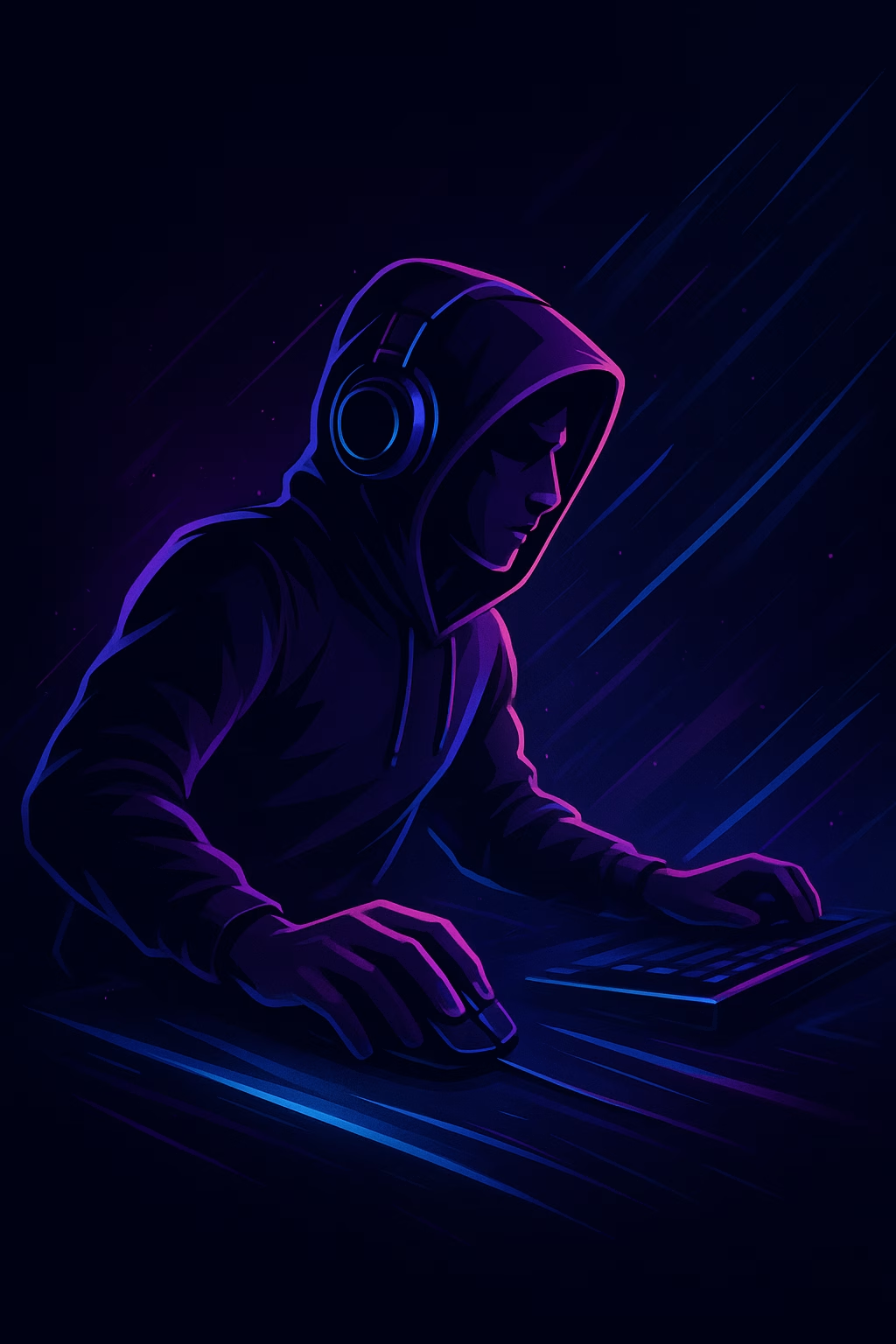
Tilt is the most expensive mistake in ranked, because it does not cost you one round, it costs the whole session. The pattern is always the same: a fight you should not have lost, then faster decisions, then worse decisions, then three more lost matches and a rank drop you spent a week earning. The problem is not that you get angry - everyone gets angry. The problem is that you have no procedure for the moment it happens.

In a session we work on specifics: how to spot your own warning signs before they reach your gameplay, what exactly to do between rounds, when to stop the session, and how to come back after a losing streak without replaying it in your head. We also cover something most players skip: how to set up comms so a toxic teammate does not get to run your evening.

The second area is focus. Holding attention for three hours is a skill you train, not a personality trait. We work on removing distractions, on how long your playing blocks should be, on when to take a break, and on not queuing ranked with a head already tired from work or school. Most rank drops do not come from lack of skill - they come from playing at the wrong time of day.

The third is the long game: training discipline, realistic goals, and surviving the stretch where your rank stands still despite the work. That is the most common point people quit - and usually needlessly, because a plateau is a normal stage, not a signal to stop.

Sessions in this area: tilt control, focus, playing under pressure, mindset and discipline plus the month-long program ULTIMATE Mental.

Daily Routine, Sleep and Energy

The most common scenario looks like this: school or work until five, dinner, a while on your phone, and ranked starts at ten and ends at two. Alarm at seven the next morning. After a week of that rhythm your reaction time drops, decisions get slower, and you explain it to yourself as being off form. That is not form. That is sleep debt.

We work on arranging your day so gaming does not happen at the cost of everything else. When you actually have your best head, and how to move your hardest matches into that window. How to end a session so you can fall asleep afterwards, instead of lying there for an hour with your head full of the last round. What to change in your evening for deeper sleep - light, food, caffeine, and what you do in the final hour before bed.

The second topic is daytime energy. Constant tiredness despite a full night usually has a few simple sources: irregular meals, dehydration, no daylight, no movement, and caffeine at the wrong hours. We go through your actual day and look for those, instead of handing you a generic list of good advice.

The third is building habits that stick. Most changes collapse in week two because they are too big at once. We set them small enough that skipping them is harder than doing them, and so that one pulls the next along.

Sessions in this area: daily planning, fighting fatigue, building habits, goals and organisation plus the month-long program ULTIMATE Lifestyle.

Desk Ergonomics and Movement

After four hours in the chair your neck is stiff, your lower back is complaining and your wrist starts to burn. Most players accept this as normal. It is not normal - a large part of it comes from a badly set up desk and from not moving at all for hours.

We start with the setup, because that is the fastest win. Desk and chair height, lumbar support, monitor position so you are not tilting your head, keyboard and mouse placement, forearm and wrist position. These are adjustments you make once and feel every day. We go through your actual desk, not a generic diagram from the internet.

The second element is movement during a session. This is not about the gym or an hour of training - it is about a few minutes at the right moments. Loosening the neck and shoulders between matches, opening the hips after a long sit, a break for your eyes on a twenty-minute rhythm. Things you can do at the desk, with no equipment and without leaving the room.

The third is stamina for long sessions. A tournament or a long ranked evening is a physical load, even sitting down. We show you how to prepare for one and how not to finish it with your head pushed into the screen and your shoulders at your ears.

Sessions in this area: ergonomics and the lower back, movement at your desk, stamina and fatigue plus the month-long program ULTIMATE Physics.

What these sessions are, and what they are not

This is gaming performance coaching, not medical or psychological care. Our coaches are esports practitioners, not psychologists, physiotherapists, doctors or dietitians. We do not diagnose, we do not provide therapy, and we do not treat any condition.

We work on what sits in the area of habits, daily organisation, how you react to pressure in game, and how your desk is set up. If you are dealing with persistent pain, an injury, chronic fatigue, anxiety, low mood, or anything that takes away your normal functioning outside the game - take it to a doctor, a physiotherapist or a psychologist. We will tell you that plainly in a session, rather than selling you another one.

One does not exclude the other. Coaching can work alongside professional care, but it does not replace it.

1-on-1 Gaming Coaching - CS2, Valorant, League of Legends and Deadlock

One-on-one sessions with coaches who play at the level you are fighting for: FACEIT Level 10 in CS2, Immortal in Valorant, Eternus in Deadlock. No recycled guide advice - we work on your matches and your mistakes. Most players already know what counter-strafing is and how the economy works. The problem is not knowledge. It is that nobody has ever gone through their actual demos and told them which three habits are costing them rounds in every single game.

CS2 - Demo Review with a FACEIT Level 10 Coach

Sixty minutes one-on-one with KaRzye, who has over 500 analysed demos behind him. We go through your recent matches, catch the patterns you cannot see yourself, and you leave with a plan for your next ten solo practice sessions. Crosshair placement, the utility that actually wins rounds, clutch decisions, economy management and tilt control. Bring your last loss - we will show you exactly why you lost it. See the CS2 session

Valorant - the Road to Immortal

For players stuck at a rank, dying first every round, or with inconsistent aim. We work on counter-strafing and crosshair placement, but also on when and where to use your abilities so they create space instead of being wasted. From Ascendant upwards we move into rotations, team dynamics and comms. The session can be live or a VOD review - we especially recommend the second one. See the Valorant session

League of Legends - Macro and Getting Out of Elo Hell

A session shaped around your role and level. Map control, securing objectives and closing games out, building a champion pool that fits your style and the current meta, wave management and lane trades. For Diamond and above we add decision-making analysis and how fast you react to what is happening on the map. See the LoL session

Deadlock - Macro and Rotations from an Eternus Coach

The Deadlock meta shifts every few weeks, so we teach what does not expire with a patch: reading the flow of the map, knowing when to push and when to rotate, hero-specific mechanics, and the mindset that lets you adapt. We will also tell you straight that until the game launches officially, memorising builds is not worth your time. See the Deadlock session

VOD Review - No Live Session Needed

For people who have no time for an online meeting, or who simply prefer their feedback in writing. You send a link to your recording, a coach breaks it down frame by frame, and you get back a report with your recurring mistakes, an assessment of your decisions and a list of things to practise. Works for any game in our offer. See the VOD review

How a Session Works

  1. You pick a game and book a slot. If you are not sure which one fits, message us on Discord or at info@ultimatemove.eu.
  2. You send the material - a demo, a recording, or you simply turn up with your last loss.
  3. One-on-one session. We pause the recording, explain why a given decision was wrong and what to do instead.
  4. You leave with a concrete practice plan, not a list of platitudes.

Frequently Asked Questions

How long is a session and do I need a microphone?

A live session is one hour, one-on-one. A microphone helps a lot, because half the value of coaching is the conversation while we watch. If you would rather not talk, take the VOD review - you get the same thing in writing.

I am low ranked - is that not a waste of the coach's time?

No. At lower ranks there are usually a few very specific habits costing the most rounds, and those are the fastest points to win back. The harder work is with a player who already has everything in order and is chasing the last few percent.

What if the problem is not skill but hardware?

We will say so plainly. Input lag, a mouse sensor skipping pixels or badly chosen eDPI can all look exactly like bad aim. In that case we will point you to optymalizację PC instead of selling you another coaching session.

Can I request a specific topic?

Yes, and it is the best option. Message us before the session with what you want to focus on and we will prepare for exactly that. The scope of a session is not a fixed list - it changes depending on what your matches show.

Coaching for a game that is not listed?

Write to info@ultimatemove.eu. The VOD review works for any competitive game - we may well take it on.

Shopping Cart