Deadlock Items and Builds 2026: The Complete Shop Guide
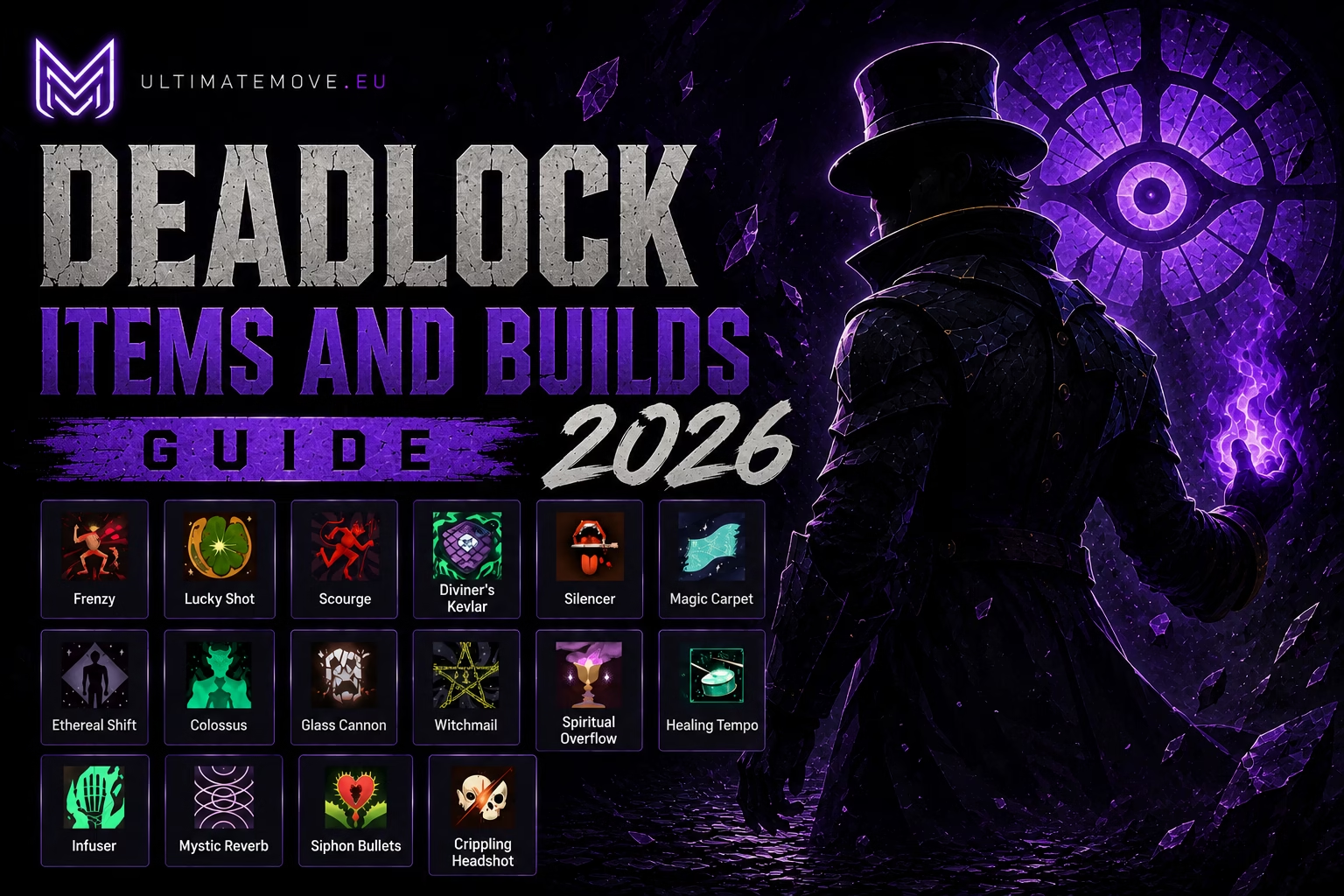
Deadlock - Items and Builds Are a Real Problem.
The shop in Deadlock is one of the most complicated systems Valve has ever built. 156 items, three categories (Weapon, Vitality, Spirit), four cost tiers, extra slots unlocked by the team, imbues tied to specific abilities, components that build into pricier items... If you are coming from CS2 or Valorant, where you buy an AK and that is it, Deadlock will leave you lost. Valve does not want you to pull a build off the internet and copy it. Valve wants you to understood, which item to buy for a given situation in the match. That is exactly why most players lose objective fights...
This guide is based on:
- my own experience in Phantom+ ranked
- coaching sessions with players from Seeker up to Ascendant
- the July/August 2026 patch updates
- Deadlock Wiki - Items
Assumptions: This article assumes you understand the basics of Deadlock - what souls are, how lanes and objectives work. If you do not, start with our beginner's guide. Here we go deep into item economy.
Shop Structure: Three Categories, Four Tiers
The Deadlock shop is split into:
- Weapon (yellow) - increase gun damage, fire rate, magazine size and bullet effects
- Vitality (green) - health, regeneration, resistances, shields, mobility
- Spirit (purple) - ability power, cooldowns, effect duration, charges
Every hero starts with 9 slots, each of which can hold an item of any type. On top of that, the team can unlock 3 Extra Slots (12 max) by destroying enemy structures.
Cost tiers:
| Tier | Cost | Role in the match |
|---|---|---|
| Tier 1 | 800 Souls | Lane efficiency - sustain, ammo, early trading power |
| Tier 2 | 1600 Souls | First specialization - you commit to a build direction |
| Tier 3 | 3200 Souls | Mid-game power spikes - game-changing effects |
| Tier 4 | 6400 Souls | Late-game definition - expensive, powerful actives and imbues |
Higher tier = higher investment bonus. The Weapon Damage bonus scales from +9% (Tier 1) to +54% and beyond at full investment. Health from Vitality goes from +9% to +66%. Spirit Power from +7 to +100. Which means that even a defensive item at Tier 3 gives you more stats than the same item at Tier 1.
BIOS, memory, network and input we go through together on your screen. We measure before and after in your games, so you see the difference yourself, before we hang up.
System Investments: Why Buying a Bit of Everything Is a Mistake
This is a mechanic almost nobody talks about, and it defines the entire build system. The more Souls you invest in one category, the bigger the passive investment bonus you get from that category. The system rewards specialization.
| Souls Invested | Weapon Damage | Health | Spirit Power |
|---|---|---|---|
| 800 | +9% | +9% | +7 |
| 1600 | +12% | +12% | +11 |
| 3200 | +18% | +20% | +19 |
| 4800 (investment bonus) | +46% | +38% | +38 |
| 6400 | +54% | +42% | +45 |
| 11200 | +74% | +50% | +59 |
| 28800 (max) | +115% | +66% | +100 |
If you buy 4 Weapon items and zero Spirit, your gun damage will be significantly higher than if you had spread the same Souls across 2 Weapon + 2 Spirit. Buying a bit of each is the most expensive mistake in Deadlock.
Unfortunately it is sometimes a necessity too. The meta shifts, new characters enter the game, and sometimes you have to run a couple of items that do not suit you at all just to be playable (say you get the Lash, Dynamo, Haze, Doorman, Drifter, Paige combo).
What does that mean in practice? You need to know what your hero actually deals damage with:
- Gun heroes (Haze, McGinnis[?], [Celeste - controversial, she deals damage with Spirit too]) → Weapon-first build
- Spirit heroes (Kelvin, Dynamo, Apollo) - Spirit-first build
- Mixed heroes (Victor, Shiv, Vyper) - one category as the core, the other as a supplement
Components and the Upgrade System: Do Not Waste Slots
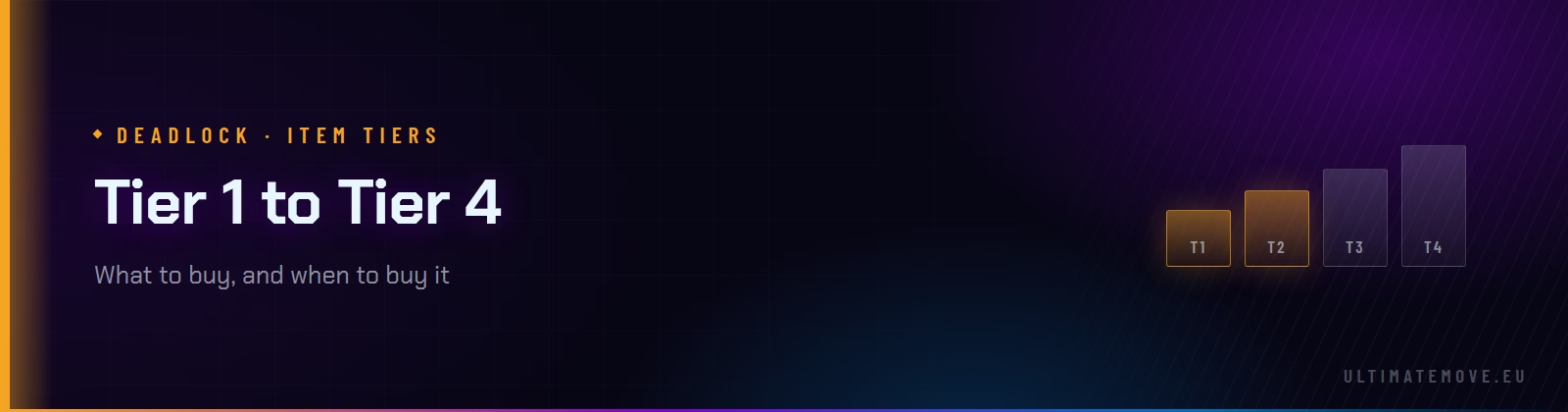
Many expensive items are built out of cheaper components. You buy Tier 1, then Tier 2/3/4 and you only pay the difference. Your early buy is never wasted.
Example path:
- Headshot Booster (T1) - Headhunter (T3)
- Every upgrade carries over the value of the previous item
- Selling in the shop refunds half the value, so only sell when you are buying an upgrade
- If you sell an item before the shop window closes, you get a full refund
Rule: read the damage that is killing you. Deadlock has exactly two damage types:
- Weapon Damage - bullets, scales with your level and the Weapon Damage stat
- Spirit Damage - abilities, scales with Spirit Power
- Well, Venator still has Pure DMG BUT IT IS ONLY HIM FOR NOW, OKAY? XD Yoshi pls.
Each type has its own resistances. Dying to Infernus burn and buying Bullet Resilience? You are wasting Souls. Buying Spirit Resilience against Graves? Also a mistake.
Best Tier 1 Items: What to Buy in Lane
Your first buys decide whether you win the laning phase. These are the items I buy in 90% of matches:
Monster Rounds (Weapon T1)
Bonus damage to troopers = faster last hits = more confirmed Souls. This is the number one safe opening buy for any hero that farms with their gun.
Extra Stamina (Vitality T1)
Extra stamina bars are the difference between being able to dash mid-fight and standing still as a free crosshair. Never enter a fight on zero stamina.
Healing Rite (Vitality T1)
Lane sustain. Lets you stay on the lane after a bad trade instead of bleeding farm. Gives regen and sprint speed, but it drops the moment you take damage from enemy heroes or objectives.
Extended Magazine (Weapon T1)
More ammo = more damage per magazine. A core pickup for every gun-damage hero.
Mystic Expansion (Spirit T1 - Imbue)
Increases the range and effect radius of the chosen ability by 20%. A great opening imbue for heroes whose effectiveness is defined by range (Kelvin, Seven - the latter especially after the nerfs to ult range and gun damage).
Key Tier 2-3 Items: Mid-game Power Spikes
This is where the build starts to define itself. These are the items that swing matches:
Headhunter (Weapon T3)
Bonus headshot damage. For accurate players this is enormous burst potential. Headshots already deal 1.65x damage - Headhunter multiplies that.
Compress Cooldown (Spirit T2 - Imbue)
Reduces the cooldown of one chosen ability by 18%. For kit-driven heroes (Kelvin, Dynamo) this often matters more than raw Spirit Power.
Bullet Resilience / Spirit Resilience (Vitality T3)
Damage reduction against the matching source. PRO TIP: check the damage log and buy against the type that is actually killing you.
Silencer (Weapon T4)
A powerful anti-ability item, especially effective against Spirit-heavy compositions.
Fortitude (Vitality T3)
Massive health plus regeneration. Turns bruisers into tanks. A must-buy on frontline heroes in the mid-game.
The Imbue System: Personalizing Your Build
Imbues are items that require you to pick one specific hero ability. They usually boost only that one ability, or give it a bigger stat bonus than the rest. The chosen ability is called the Imbued Ability.
Important: Imbuement is item-specific - imbuing two different abilities, say Compress Cooldown and Quicksilver Reload, will not give both effects to both. One ability can, however, be imbued by several sources at the same time.
Full list of Imbue items (July 2026):
| Item | Tier | Cost | Effect |
|---|---|---|---|
| Mystic Expansion | T1 | 800 | +20% Ability Range and effect radius on the imbued ability |
| Compress Cooldown | T2 | 1600 | -18% Cooldown on the imbued ability |
| Duration Extender | T2 | 1600 | +22% Duration on the imbued ability |
| Quicksilver Reload | T2 | 1600 | -18% Cooldown on the imbued ability (alternative to Compress) |
| Ballistic Enchantment | T3 | 3200 | +22% Ability Range; damage from the imbued ability grants Weapon Damage per hero hit |
| Surge of Power | T3 | 3200 | Permanent Spirit Power on the imbued ability, plus Move Speed and Fire Rate after use |
| Echo Shard | T4 | 6400 | Resets the cooldown of the imbued non-ultimate ability (CD: 30s + the imbued ability cooldown) |
| Mercurial Magnum | T4 | 6400 | The imbued ability charges up with bonus spirit damage, fire rate and reload. Bullets grant bonus spirit damage |
| Mystic Reverb | T4 | 6400 | Lifesteal on the imbued ability, slow on the target hit, plus AoE damage around the target after 3s |
| Mystic Reverb (Legendary) | T5 | 9999 | Frostbite Charm - Cooldown reduction and Spirit Power, freezes the target on damage |
Rule: buy imbues late, once you already have a solid core build. Early imbues usually just waste slots, unless Mystic Expansion at T1 is critical for your range-dependent hero.
Active Items: How Many Buttons Can You Actually Handle?
The system allows a maximum of 4 active items in a build. Once bought, they have to be assigned to one of the 4 key slots.
Never buy 4 actives at once. An unused active has 0% effectiveness. The general rule is simple: the more active items you can genuinely use, the better you will be.
Start with one high-impact button that has a clear trigger:
- Grit (Vitality T1) - a short Barrier. The cheapest active, 60s cooldown. Perfect for learning.
- Fleetfoot (Weapon T2) - Move Speed and Slow Resistance for 5s. Mobility = survival.
- Majestic Leap (Vitality T3) - a leap into the air with a Barrier. Engage or escape. (A bit of a larp item, I am not really a fan, it used to be better.)
- Warp Stone (Vitality T3) - forward teleport with Bullet Resist. Pure positioning.
Remember - add more actives only once you can genuinely handle the ones you already have, otherwise you are just trolling. I see it constantly, usually right as I am dying (xD): players holding abilities for an entire team fight or never using their items, and I have a small stroke every time.
Counter-Buying: How to React to the Enemy Composition
My favourite Deadlock enthusiasts, whose entire skill set is left-right and I buy a build off the internet. | Here is the counter-buy table:
| Problem | Solution |
|---|---|
| Heavy enemy healing / regeneration | Healbane (Vitality T2) - anti-heal on the key target |
| A weapon carry is deleting you | Bullet Resilience, Metal Skin, Disarming Hex, or strong Shields / E-Shift |
| Spirit burst ends the fight | Spirit Resilience, a shield (Divine Barrier), Dispel Magic or Silence Wave |
| Long channels / mobile ultimates | Knockdown (Stun after 2s), Silence Wave, Disarming Hex |
| A fast target always gets away | Slowing Hex (slow + silence movement items), Vortex Web (pull + slow) |
| CC is wrecking you | Dispel Magic (purges non-ultimate debuffs) or Unstoppable (immunity to Stun, Silence, Sleep, Disarm), or CounterSpell |
Rule: identify the event that loses you the fight, then buy the item that changes that event into pure gaming bliss (YEAH, SURE). More damage is not the answer when you are stunned, out of range, or dead.
Builds for Popular Heroes (July 2026 Meta)
Here are proven builds from coaching sessions and tracklock.gg data:
Haze - Assassin / Carry
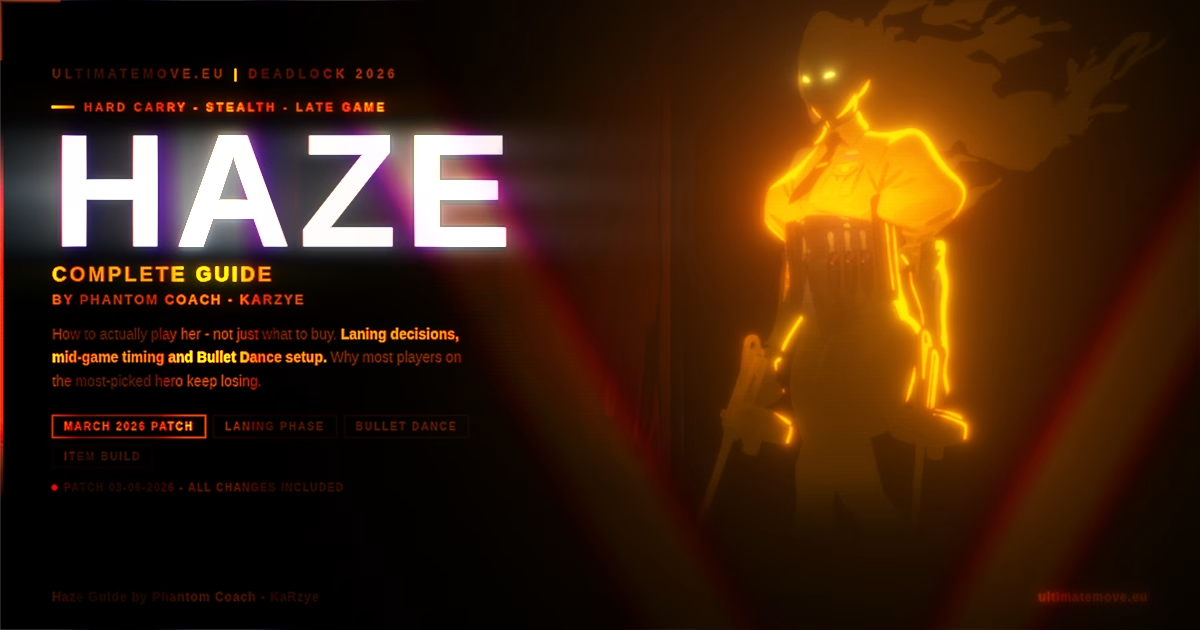
Direction: Weapon + Spirit (Spirit first)
- T1: Monster Rounds → Ricochet
- T2: Weakening Headshot → Surge of Power (Imbue Dagger)
- T3: Rapid Fire → Burst Fire (long slide)
- T4: Situational - Silencer vs Spirit-heavy, Unstoppable vs CC-heavy
Sleep Dagger scales with Spirit, Bullet Dance with Weapon. Build both, but Spirit first.
Infernus - Arsonist / Midline DPS
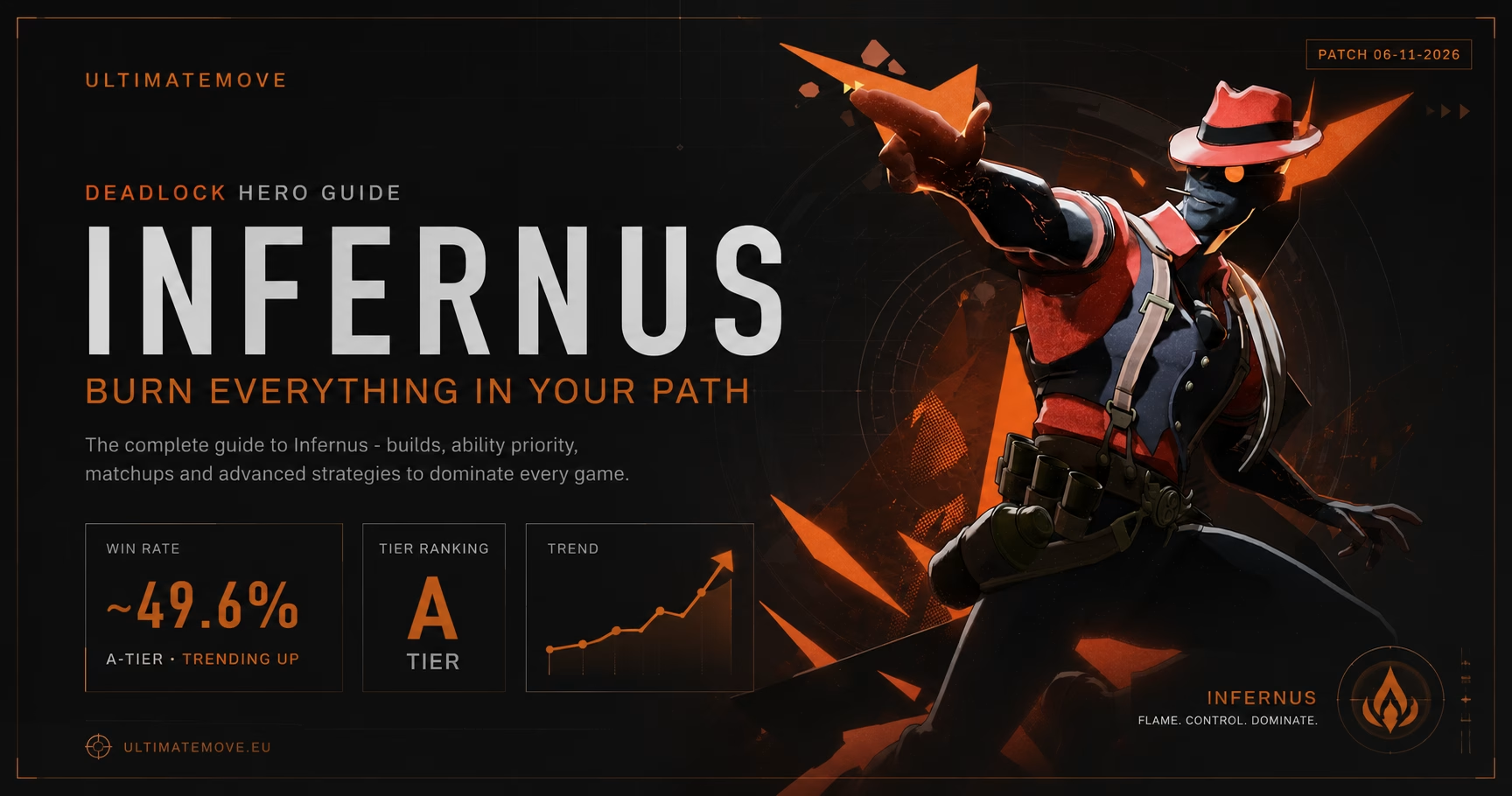
Direction: Weapon + Vitality
- T1: Monster Rounds → Healing Rite
- T2: High-Velocity Rounds → Spirit Lifesteal
- T3: Duration Extender → Infuser (there are several builds; the Dash one is usually easier)
- T4: Situational - Silencer vs ability-heavy, Unstoppable vs CC-heavy
Fire rate + bullet lifesteal + enough HP to survive on the midline.
Kelvin - Spirit Mage / Control

Direction: Spirit + Vitality
- T1: Extra Spirit → Mystic Expansion (imbue Frozen Shelter)
- T2: Compress Cooldown (imbue Frozen Shelter) → Spirit Shielding
- T3: Rapid Recharge → Fortitude
- T4: Boundless Spirit (endgame power spike) or Spirit Burn (shuts down healing)
Cooldown reduction + Spirit Power so your abilities keep cycling non-stop.
Abrams - Tank / Brawler

Direction: Vitality-first with Weapon as a supplement; some players build Spirit as well.
- T1: Extra Health → Extra Stamina
- T2: Close Quarters → Warp Stone
- T3: Fortitude → Spirit Resilience
- T4: Unstoppable (cleanse against CC-heavy teams) or Juggernaut
The easiest hero in the game.
Seven - Wave Clear / Teamfight Presence
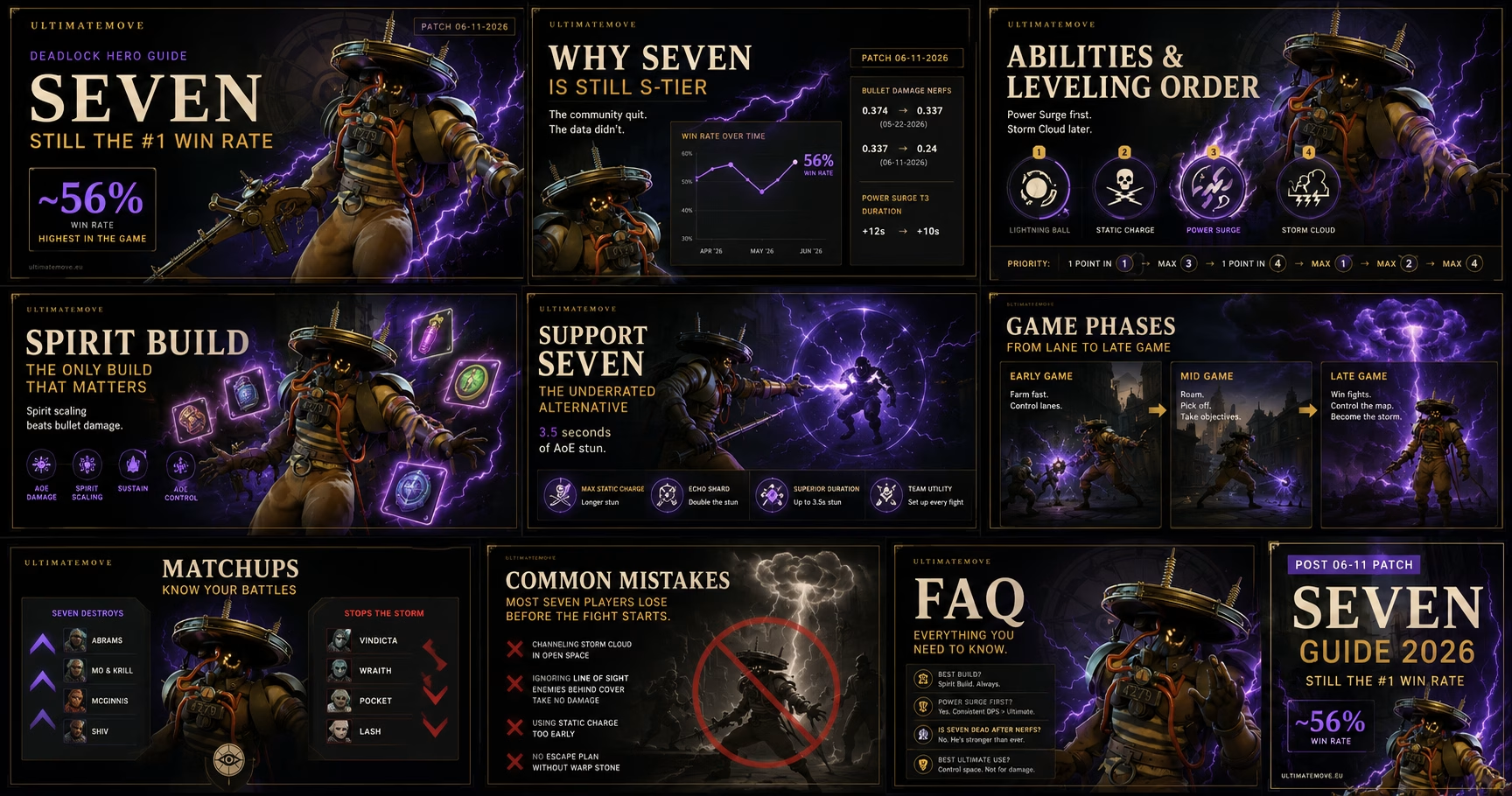
Direction: Spirit-heavy with Weapon as a supplement
- T1: Extra Spirit → Monster Rounds
- T2: Compress Cooldown (imbue Lightning Ball) → Extended Magazine
- T3: Rapid Recharge → Silencer
- T4: Boundless Spirit (massive ability damage) or Echo Shard (non-ultimate reset)
Lightning Ball + Static Charge = a farming monster. Storm Cloud is a teamfight ultimate, and a treacherous one.
The Most Common Shop Mistakes (from low MMR replays)
I see these mistakes in almost every replay from players below Phantom:
- Sitting on Souls - unspent Souls are zero stats. Buy after every death, and preferably before...
- Buying a bit of everything - 1 Weapon + 1 Vitality + 1 Spirit = zero investment bonus. Pick a direction.
- The wrong type of Resist - dying to Spirit damage and buying Bullet Resilience? Check the damage log.
- 4 actives at once - an unused active is 0% effectiveness. Start with one.
- Copying a build with no context - a public build is a starting point, not a religion, although... Adapt it to the matchup.
- Selling efficient early items - components build into more expensive items. Do not sell without a reason.
When to Buy: Buy Timing
This is the difference between knowing what to buy and knowing when to buy:
- Death buys: After every death you get shop time. Buy Tier 1 components - even if it is only Monster Rounds.
- Lane buys (0-8 min): Sustain, ammo, movement. Hold the lane and farm.
- Mid-game buys (8-15 min): Core Tier 2-3 items. This is where you commit to a build direction.
- Late-game buys (15+ min): Tier 4 power items + counter-buys. You either multiply your win condition or strip the enemy advantage.
A delayed perfect item is usually worse than efficient buys that keep your economy alive.
Extra Slots: When and How to Use Them
You unlock extra slots as a team by destroying structures:
- Destroy the Walkers → 3 extra slots
- Max 3 extra slots (12 slots in total)
An extra slot that can hold any item from any category. Which means you can run 5 Weapon items if your team has unlocked an extra slot. But remember: an item in an extra slot still feeds the bonus of its original category.
Summary: Set Yourself 5 Golden Shop Rules
- Pick a direction and stick to it - Weapon, Vitality lub Spirit. Nie kupuj „wszystkiego po trochu”.
- Check the damage log before every buy - buy resistances against the damage type that is killing you.
- Buy before the team fight - unspent Souls are zero stats.
- Stop praying to one build left and right. - adapt to the matchup, do not copy blindly, or you will end up hardstuck and crying on reddit that your favourite aimbot character (Graves) got nerfed again and now you are dropping out of Eternus.
- Counter-buy intelligently - identify the problem, then buy the solution. More damage is not always the answer.
The Deadlock shop is not a shopping list from your mum xD. It is a decision tree: buy what lets your hero do its job, then spend the next slot on whatever keeps you leading the game or fits your playstyle.
Valve patches aggressively - always check the latest changes before applying any build.
FAQ
How many items are there in Deadlock?
Currently 156 buyable items: around 41 Weapon, 39 Vitality and 37 Spirit. On top of that there are 17 Legendary items available only in Street Brawl. The number changes with every patch.
How many item slots do I have?
9 slots to start with, and each can hold any item type. Your team can unlock up to 3 Extra Slots (12 max).
Should I blindly copy public builds?
No. Treat them as a proven starting point and the situational sections as branches. Adapt to lane pressure, enemy damage, healing, control, your team extra slots and the objective you are fighting for.
What should I buy first?
The cheapest item that solves your most repeatable problem. In lane that is usually sustain (Healing Rite), ammo (Extended Magazine / Monster Rounds), movement (Extra Stamina) or a stat that improves your Souls collection and trading.
How do imbues work?
Imbues are items that require you to pick one specific hero ability. They boost only that one ability (Compress Cooldown cuts the chosen ability cooldown by 18%, Mystic Expansion increases its range). One ability can be imbued by several sources at the same time.
How many active items can I have?
A maximum of 4 purchased active items assigned to key slots. But do not buy 4 at once - start with one high-impact button that has a clear trigger (Grit at T1, for example).
Related articles
- Deadlock Tier List 2026 - which heroes are the best in the current meta
- Best Deadlock Settings 2026 - FPS and performance optimization
- Deadlock Infernus - Poradnik 2026
- Deadlock Seven Guide 2026
- Deadlock Haze Guide 2026
- Deadlock Coaching at UltimateMove - 1-on-1 sessions
Frames dropping exactly when the fight starts?
Deadlock leans hard on the CPU during team fights, which is the moment your frames fall and your aim stops landing. We tune your PC remotely: Windows, drivers, BIOS and network. You can measure it yourself before and after, in the game, with us watching. We do not stop you.
See PC optimizationSatisfaction guarantee and six months of support after the session. Not sure if it is worth it? Ask for a free check on our Discord.Our free tools
Built in house. No account, no limits.
 Ultimate Demo Analyzer
Upload a CS2 demo and get your mistakes and round stats written out.
Free, no account Deadlock Replay Analyzer
The same for Deadlock: a replay breakdown and a plan for the next matches.
Free, no account Sensitivity Converter
Carry your cm/360 between games without losing muscle memory.
Free, no account Aim Trainer
Thirty seconds, three levels. No install, no account.
Free, no account