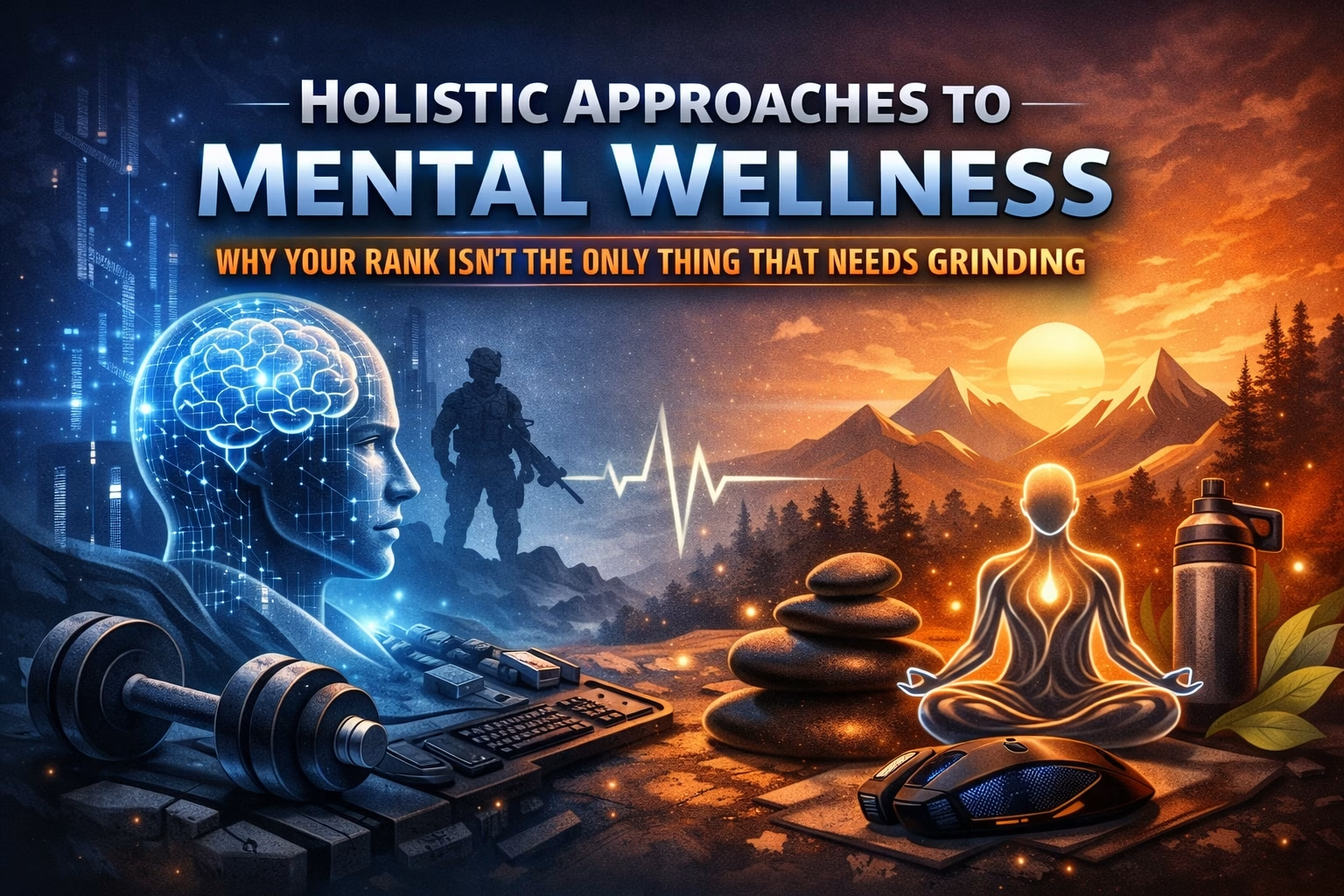
- Holistic performance in gaming requires physical health, emotional regulation, and cognitive recovery
- Sleep and nutrition directly affect reaction time, focus, and tilt resistance
- Ladder anxiety improves when self worth is separated from rank outcomes
- Emotional regulation techniques restore decision making under pressure
- Sustainable performance starts outside the game environment
Key Takeaways
We need to address a pattern that shows up repeatedly in high performing gamers. You optimize your PC. You train your mechanics. You know the maps. Yet your performance feels unstable. Two matches are enough to drain you. One toxic comment ruins your focus. Sleep feels shallow and recovery never feels complete.
From a psychological perspective, this is not a skill issue. It is a regulation issue.
At UltimateMove, we work with players who are technically capable but cognitively overloaded. In most cases, performance plateaus are not caused by lack of knowledge, but by chronic mental strain that quietly accumulates outside the game.
This is where a holistic approach becomes necessary.
Performance Starts Before You Queue
In competitive environments, the brain is often treated as an abstract tool. In reality, it is a biological system that reacts to stress, sleep debt, nutrition, and emotional load.
Cognitive functions such as reaction time, working memory, and decision making are directly influenced by physical state. When those systems are under strain, no amount of grinding compensates for it.
Sleep Is Not Optional Recovery
Late night grinding is often rationalized as commitment. From a neuropsychological standpoint, it is closer to self sabotage.
Sleep deprivation elevates cortisol, reduces emotional control, and lowers tolerance to frustration. This directly increases tilt, impulsive decisions, and tunnel vision in game.
The practical adjustment is simple. Treat sleep as part of training. Establish a consistent shutdown window before bed. Reduce screen exposure and stimulation at least one hour before sleep. Recovery is a prerequisite for learning, not a reward.
Nutrition and Cognitive Stability
Rapid spikes and drops in blood sugar create fluctuations in attention and emotional regulation. This often presents as brain fog, irritability, or inconsistent performance.
Stable hydration and balanced meals support sustained focus. The goal is not optimization for aesthetics but consistency for cognition.

Mental Resilience Is a Trainable Skill
- One of the most common stressors in competitive games is the fear of falling in the rankings. Fear of losing is often more destructive than losing itself.
- From a cognitive-behavioral perspective, this is a distortion in the way results are interpreted.
- Changing perspective on results
- Losing is often subconsciously interpreted as a judgment of personal worth. This results in avoidance, hesitation or excessive aggression.
- The corrective action is a change of perspective. Loss becomes information, not identity. Death becomes positional data, not proof of incompetence.
- When self-esteem is separated from ranking, learning accelerates.
- Adjusting the tilt instead of suppressing it
- Tilt is not a character flaw. It is a physiological response to stress.
- Simple breathing techniques, such as controlled rhythmic breathing between rounds, help bring the nervous system out of the fight-or-flight state. This restores access to rational decision-making and motor control.
- Emotional regulation is a skill that is perfected through repetition, not willpower.
Digital Hygiene and Cognitive Load
Constant stimulation between matches prevents the brain from consolidating information. Browsing social media while waiting in line keeps dopamine levels high, reducing the brain's ability to reset.
Deliberate breaks are not a sign of laziness. They are necessary for maintaining proper neuron function.
Short breaks from screens, walks, or quiet rest allow the brain to return to its initial state. This improves concentration, patience, and motivation during subsequent sessions.
The environment is also important. If possible, separate your gaming area from your sleeping area. The brain needs contextual boundaries to completely switch off performance mode.
When Coaching Is Not Enough
There is an important difference between performance coaching and mental health support.
Coaching focuses on skill development, structure, and implementation. Therapy focuses on emotional patterns, anxiety, and long-term reactions to stress.
At UltimateMove, we clearly define this boundary. High-level coaching works best when the nervous system is balanced. In the case of chronic anxiety, burnout, or symptoms of depression, external support from a professional is not a sign of weakness.
A calm mind learns faster and works more consistently than a stressed mind.
The Long Term Performance Mindset
You can never expect peak performance from a system that is overheatingand not being maintained. The same applies to the person who operates it.
Holistic mental health is not about lowering standards. It is about creating conditions that allow you to maintain high performance over the years, rather than short bursts of energy followed by burnout.
When you take care of the player, performance becomes a consequence, not a struggle.





 By
By